
The Invisible Backpack Children Carry

Every morning, children walk into school carrying far more than a backpack.
Some arrive after a restful night in a stable home. Others arrive carrying worries that would challenge many adults: caring for younger siblings, uncertain housing situations, food insecurity, family conflict, financial stress, or the prospect of moving yet again to a different neighborhood and school.
For many children in need, anxiety is not an occasional feeling. It is a weighty daily companion.
Research has consistently found that housing instability and frequent school changes disrupt children's academic progress, social relationships, and emotional well-being, particularly when moves are connected to family stress, economic hardship, homelessness, or other adverse life circumstances. As educators, it is easy to see the gap in achievement. It is much harder to see the life circumstances that contribute to it. [nationalac...demies.org], [nationalac...demies.org], [jstor.org]
Learning is not simply a matter of presenting information and expecting children to absorb it. Learning requires attention, working memory, concentration, and the ability to process new information. Anxiety competes for those same resources. When a child is worried about what is happening at home, whether there will be dinner that evening, or whether another move is coming, part of the brain remains focused on survival rather than learning.
The Harvard Center on the Developing Child notes that persistent fear and chronic anxiety disrupts the developing architecture of the brain and affects children's ability to learn, solve problems, and relate to others. Research also shows that stress and anxiety are associated with reduced learning capacity, lower academic achievement, and poorer educational outcomes. [developing...arvard.edu], [developing...arvard.edu][frontiersin.org], [pmc.ncbi.nlm.nih.gov]
This means that some children are not struggling because they are unable or unwilling to learn. They are struggling because their brains are working overtime to manage stress.
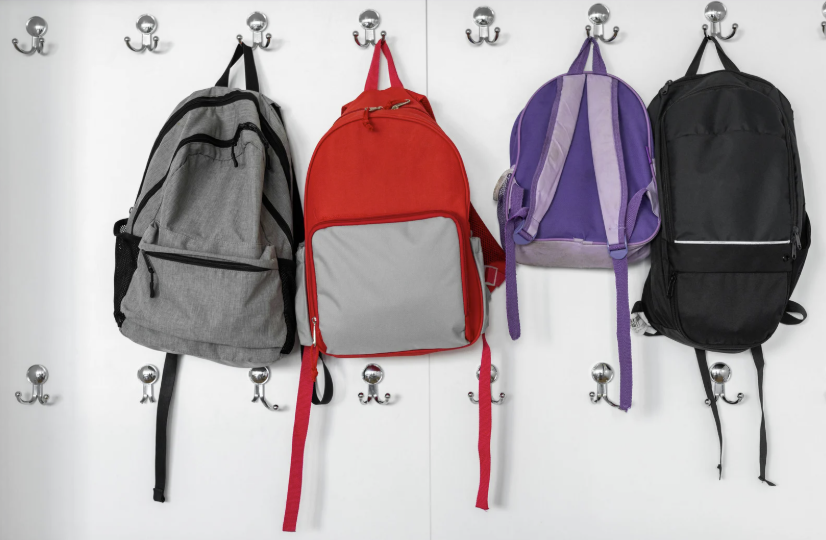
As adults, most of us know what anxiety feels like. Think about a time when you were worried about a financial problem, caring for a sick family member, facing a major deadline, or dealing with uncertainty about the future. Even simple tasks became harder. You may have found yourself rereading the same email multiple times, forgetting details, struggling to focus in meetings, or feeling mentally exhausted by decisions that would normally be routine. The information was not beyond your ability to understand. Your mind was simply occupied elsewhere.
Children experience the same challenge. The difference is that they often have no control over the circumstances. Little ones cannot resolve financial problems, change their living situation, repair family conflict, or control whether another move is coming. Yet they carry the emotional weight of those realities into the classroom every day. This perspective does not lower expectations for children. Instead, it helps us understand the conditions necessary for them to meet those expectations.
Rethinking Some of Our Assumptions
Many educational conversations begin with the question, "How do we accelerate student learning?"
Perhaps a better question is, "What is getting in the way of learning in the first place?"
If anxiety is consuming children's mental energy, and if instability is disrupting development, then assigning more tasks may not address the root problem.
Before we can truly address the achievement gap, we must understand the conditions that make learning possible.
Coming Next...
In Part 2, we'll explore what teachers and parents can do differently. We'll look at practical ways to reduce anxiety, build emotional safety, and create learning experiences that support children rather than adding to their stress. We'll also discuss why some traditional homework practices may be working against the very outcomes we hope to achieve.
References
National Research Council & Institute of Medicine. (2010). Student Mobility: Exploring the Impacts of Frequent Moves on Achievement: Summary of a Workshop. National Academies Press. [nationalac...demies.org], [nationalac...demies.org]
National Scientific Council on the Developing Child. (2010). Persistent Fear and Anxiety Can Affect Young Children's Learning and Development (Working Paper No. 9). Center on the Developing Child, Harvard University. [developing...arvard.edu], [developing...arvard.edu]
Fantuzzo, J. W., LeBoeuf, W. A., Chen, C. C., Rouse, H. L., & Culhane, D. P. (2012). The Unique and Combined Effects of Homelessness and School Mobility on the Educational Outcomes of Young Children. Educational Researcher. [jstor.org]
Becker, S. J., & Börnert-Ringleb, M. (2025). Stress and anxiety in schools: A multilevel analysis of individual and class-level effects of achievement and competitiveness. Frontiers in Education. [frontiersin.org]
McCurdy, B. H., Scozzafava, M. D., Bradley, T., Matlow, R., Weems, C. F., & Carrion, V. G. (2022). Impact of anxiety and depression on academic achievement among underserved school children. Current Psychology. [pmc.ncbi.nlm.nih.gov]